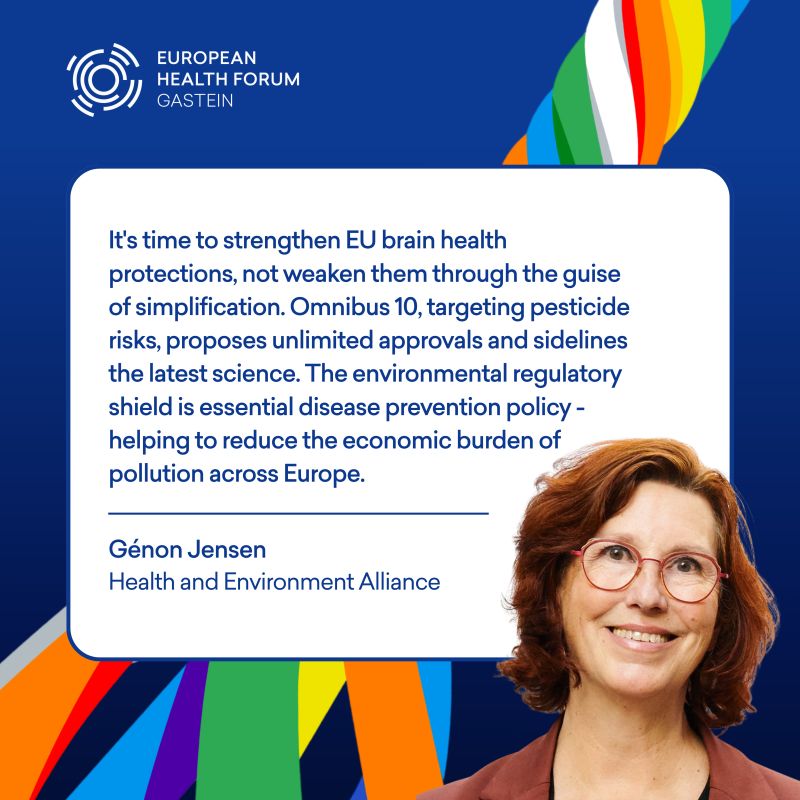
Scientists and health groups have significant concerns that the Food and Feed Safety Simplification Omnibus proposal would weaken health protection in the EU.
Today, the European Court of Justice dismissed the appeal from pesticide manufacturers to challenge once again the non-renewal of the pesticide chlorpyrifos-methyl. Studies show that chlorpyrifos-methyl can impact brain development (developmental neurotoxicity) and cause DNA damage (genotoxicity) – both potentially leading to adverse effects across generations.
Sandra Jen, Health and Chemicals Programme Lead at HEAL comments: “HEAL welcomes the decision confirming the prohibition of chlorpyrifos-methyl, which causes serious health problems across generations. To protect people’s health, it is crucial that the EU follows mounting scientific recommendations to reduce exposure to pesticides, and to stop the deregulation drive on pesticides as pursued in the Food and Feed Safety omnibus proposal.”
Many scientific studies indicate that the pesticide can contribute to decreased IQ, loss of working memory, attention deficit, autism, thyroid hormone disruption, reproductive issues, metabolic disturbances, nerve damage and Parkinson’s disease.
Regular review periods for authorisations of pesticides are crucial, as they allow the consideration of new evidence and promote safer alternatives to pesticides. That is why HEAL opposes the unlimited approvals, their extension and exemptions, proposed under the Food and Feed Safety omnibus proposal currently under discussion, and calls for its withdrawal.
Background:
This decision concludes a lengthy legal process the manufacturers initiated in 2020 against the non-renewal of the market license of the Chlorpyrifos-methyl. The European Food Safety Authority concluded in 2019 that chlorpyrifos-methyl has no safe exposure limits and thus does not meet the necessary human health criteria to be re-approved on the European market. On that basis, the European Commission issued a proposal for non-renewal of chlorpyrifos-methyl which was endorsed by qualified majority in the EU’s Standing Committee on Plants, Animals, Food and Feed (SCOPAFF). The EU Commission issued the regulation formalising the non-renewal of chlorpyrifos-methyl in January 2020.
After the non-renewal, two agrochemical companies producing the pesticide challenged the non-renewal decision of the European Commission. HEAL requested the right to intervene in this legal challenge and appeared in the European Court of Justice in September 2022 to argue that the decision for non-renewal of chlorpyrifos-methyl – as well as chlorpyrifos-ethyl – was backed by scientific evidence and fully in line with applicable EU legal provisions. The French and Danish governments also intervened in the legal procedures to support the ban. In October 2023, the General Court upheld the EU Commission decision of non-renewal, and industry appealed the ruling in December 2023.
Notes:
For further information on the health impacts of chlorpyrifos see this infographic and fact cards.
Related Posts